
AI and literature: “No longer a matter of the future”
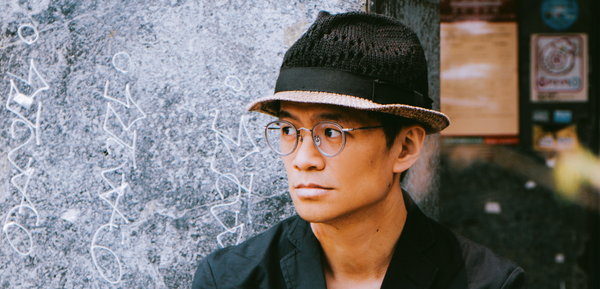
© Aenbi Kuo
What do authorship, acceptance and reading habits look like in a literary world that is increasingly shaped by artificial intelligence? Following the conference The Curated Future: AI, Creativity, and New Paths to Reading Engagement(opens in a new window), organised by Frankfurter Buchmesse in cooperation with the Taipei International Book Exhibition, we spoke with Taiwanese author Wang Tsung-Wei about creative collaboration between humans and AI. Wang painted a picture of a future in which AI is not just a tool but a partner, and in which readers help shape stories themselves.
Wang Tsung-Wei, why did you decide to use AI as a creative partner?
Since AI is something one can address—something that answers back—and since it possesses an operational capacity that produces differential, discriminating judgments, it comes to resemble a “partner” more than an instrument: like C-3PO and R2-D2, not simply machines, but interlocutors with a distinctive mode of agency. For me, then, AI is not merely a tool. It is a means by which the work can exceed me: to make a text I did not foresee, to write what I could not write.
Will AI-generated literature ever be accepted in the same way as human-created literature? Are there markets that are more open to this than others?
This is no longer a matter of “the future.” Already, certain texts—received as human literature—have in fact been accepted; only, we are timid, and we conceal the machine behind the mask of the human name. I think every market will accept AI literature, provided the works are good; the criterion is not origin but force. Human writing will not disappear; it will become rarer, and therefore more precious. Consider Go or chess: the computer has long dominated, and no human can surpass it—yet the “human intelligence” displayed by professional players, and the drama of “human competition,” remain moving and invaluable. In that sense, “the human” itself becomes more singular—until the day it is wiped out by robots.
You also talk about how this will change the role of readers. What do you think the ‘future reader’ will look like?
The reader of the future will decide what to read and, through a configured AI system, generate the literature they want. In truth, the era of online communities has already produced “reader-writers”: writers who are, first of all, readers, and whose authorship is no longer sacred in the old way. The aura of the author—once treated as a kind of holiness—has already been largely stripped away. Any reader who loves reading may, in a given domain, become a “writer.” The age of AI will make this easier; but if the result is badly written, it may also become more boring. (There have always been many badly written human texts; this is not an AI-specific problem.) Precisely for this reason, as I said above, the unhybridized “human author”—both the work and the title—will become more valuable.
Could the creative collaboration between humans and AI perhaps give rise to completely new target groups of readers? What would these look like?
This question, for me, is contiguous with the previous one. Yes: after the avant-garde, experimental phase subsides, commercialized AI literature will become a large part of the reading market. The remaining question is whether we will continue to attach a human name to it, or instead name the collaborative system itself. In that case, “the author” would designate a system of collaboration rather than a single human individual. To read literature—poetry, novels, fiction of all kinds—is an inner human hunger, an impulse that will not be extinguished. The old-fashioned reader will still exist. But new readers will grow accustomed to hybrid, human–machine generated works, and may even become part of that hybridity themselves. Perhaps what the reader buys will no longer be a book, but a novel-generating system: they can choose the characters, kill off the person they hate inside the story, live out a lifelong union with the lover they cannot be with in reality, and so on. In the exhibitions I have run on human–AI collaboration, I can feel, very directly, the participants’ urgent desire to be inside the story—to be not merely the consumer of the text, but one of its functions.
What new insights did you personally gain from the Frankfurter Buchmesse event ‘The Curated Future: AI, Creativity, and New Paths to Reading Engagement’ at the Taipei International Book Exhibition?
In Taiwan, publishing is an increasingly difficult industry—especially in the literary field where I personally concentrate. Yet it is difficult in one register and endlessly pleasurable in another. Writing, publishing, marketing, distribution: all of it has become more challenging because of global networks, AI technologies, and the rapidly evolving ways content can be transformed and circulated.
The Frankfurter Buchmesse program at the Taipei International Book Exhibition made this palpable. Humans have never ceased innovating. In fact, AI technology and human writing are not opposed in essence: both belong to the same restless human drive to pursue, invent, and create things that satisfy us and, perhaps, satisfy the world. Imagination has never truly been constrained; and that is why we overcome difficulties and continue living. The mere thought that one might help others solve all kinds of problems is exhilarating. Before the world is ruled by robots, let us enjoy this joy as much as we can.
The questions were posed by Johann-Christian Fürstenberg.
About Wang Tsung-Wei
Deputy General Manager of Linking Publishing and Editor-in-Chief
UNITAS Magazine
Since 2023, Wang has been actively leading and curating AI-related literary and publishing projects in Taiwan. His work includes Love Letters to Aillen: An Interactive Fiction Project with ChatGPT—the first interactive novel in Taiwan, created through collaboration between a human author and ChatGPT—as well as multiple AI co-creation initiatives for major cultural institutions, such as the Digital Theme Pavilion at the 2025 Taipei International Book Exhibition (TIBE), the opening exhibition of Taichung Green Museumbrary, and an AI co-creation project for a travel literature exhibition at the National Museum of Taiwan Literature.
Love Letters to Aillen was selected for the Taiwan Creative Content Fest (TCCF) and received several awards, including Shopping Design Best 100 (Experimental Classics) and the Golden Tripod Awards – Digital Content Award.