
FBM26: Where comics expand their world
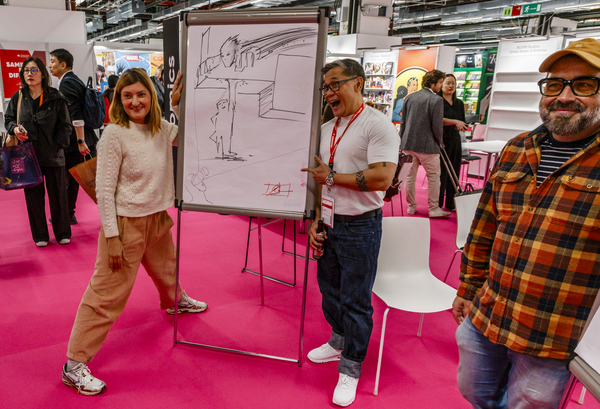
© Marc Jacquemin / Frankfurter Buchmesse
FBM26: Where comics expand their world
Comics have long been more than just a genre. They are being adapted into series, films and games – and are bringing together a growing global community. Charlotte Boschen, Key Account Manager at Frankfurter Buchmesse, explains why comics will play a bigger role than ever before at FBM 2026.
1. Comics now move quite naturally between books, webtoons, series and films. How does this change the way we view comics today?
Comics have always been part of a larger creative world. Characters moved from comic books into games or collectible albums. For a long time, however, this took place within a rather small scene.
Today, that has all changed. Nerd culture has long since become part of the pop culture mainstream. At the same time, strong communities are forming around comics. Readers don’t just follow individual volumes, but entire series, or immerse themselves in a complete storyverse.
The key point here is that comics are now understood less as a format and more as the source of stories. When a webtoon becomes a Netflix series, a manga gets an anime adaptation, or a graphic novel is turned into a feature film, it shows us quite clearly: the story as raw material is at the centre – not the medium. In this way, many other formats are developing from comics.
2. At the next Frankfurter Buchmesse, the topic of comics will be more prominent than ever before. What have you put in place for this?
A key component is the Comics Business Centre. This will serve as a meeting place for the international industry – a venue where rights managers, agencies and publishers can engage in targeted discussions.
In parallel, a Webtoon Area is being created, which we are developing together with our Webtoon Ambassador Sébastien Célimon. This allows us to capitalise on one of the most dynamic developments in the comics market.
Comics will also be more visible to the general public. There is a new joint comics stand where a wide variety of players from the scene will be presenting themselves.
Together with the Japanese festival Main Matsuri, we are also bringing the cosplay community back to the fair – with its own stage and a programme centred on manga, anime, music and Japanese pop culture.
3. You’re familiar with many book fairs and comic festivals: when so many artists, publishers, agencies and scouts come together – what actually happens in such moments?
In such moments, you quickly realise that comics are more than just a market – they are also a community.
Many stories address social issues that concern people today, both visually and emotionally. When artists, publishers and readers come together, a strong sense of belonging emerges. Graphic novel artists then discuss colours and techniques with manga artists.
These encounters are important because they not only give rise to projects but also create a shared cultural space.
To foster precisely these connections worldwide and beyond the fair, we offer the Frankfurt Global Network support programme. This year, the programme is tailored to focus on comics, manga and visual stories. Industry professionals wishing to further their knowledge and network are welcome to register with us.
4. With the Comics Business Centre, you are creating a new meeting place for the industry. What happens there in practical terms – who meets whom there?
The Comics Business Centre is a venue for international business in the comics sector.
Rights managers and agents meet publishers, editors and scouts there who are looking for new material, characters and ideas. It’s about translation rights, new markets – and stories with potential beyond the book.
The focus is increasingly on cross-media exploitation. Alongside traditional publishers, industry insiders from games, animation and webtoon platforms are also interested in new content.
At its core, it remains a rights business – except that stories today are often developed across multiple media.
5. Comics thrive on direct interaction – signings, Artist Alley, workshops. Which formats do you particularly enjoy?
A personal highlight for me is Artist Alley, which my colleague and manga expert Nathalie Quillmann organises every year. There, you sit directly opposite the artists, watch them sketch and strike up a conversation straight away. You immediately realise how much craftsmanship and time goes into it.
Live drawing sessions are also very impressive. When artists draw in front of an audience, it’s almost like a concert. You experience, step by step, how a character comes to life.
And of course, cosplay encounters are part of it too. When fans turn up dressed as characters and artists suddenly see their own characters in 3D right in front of them, it shows just how deeply these stories resonate with people.
The fascinating thing is: you usually read comics on your own – but the community behind them is very much present. These encounters give the whole culture an emotional depth.
6. When you consider the business side, the scene and the audience as a whole: at the end of the fair, how can you tell that this year’s comic fair in Frankfurt has made a difference?
One initial sign is the feedback from exhibitors. When publishers say they’ve made important contacts at the fair or have laid solid groundwork for their next financial year, that’s a strong indication.
But you can also tell from the conversations. When international partners are specifically looking for new graphic novels or webtoons – not as an experiment, but as a strategic decision.
It’s also evident within the scene. When artists are launching new collaborations or receiving international enquiries.
And finally, you can see it in the audience: when manga fans sit alongside graphic novel readers, and families, students and industry professionals attend the same events.
Personally, I notice it in the energy in the halls. When, at the end of the day, everyone is exhausted from the many conversations – and publishers say: “Next year we’ll be back with an even bigger comics programme.”
Then you know: this year’s book fair was more than just a date in the calendar.
Charlotte Boschen, Key Account Manager at Frankfurter Buchmesse
Charlotte grew up in Brussels, Belgium, and studied literature in France (Paris) and Germany (Bonn). Since 2022, she has been responsible for exhibitors from Germany, Austria, Belgium and France and heads the International Comics Business Centre.
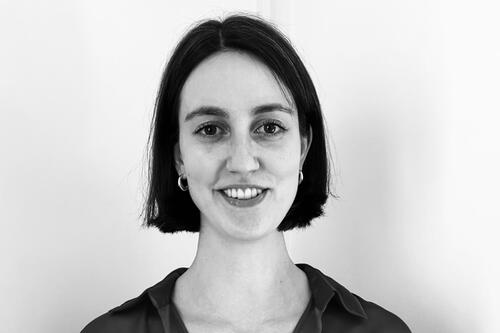
Charlotte Boschen, Key Account Manager der Frankfurter Buchmesse
Charlotte wuchs in Brüssel, Belgien, auf und studierte Literaturwissenschaften in Frankreich (Paris) und Deutschland (Bonn).
Seit 2022 ist sie für die Aussteller aus Deutschland, Österreich, Belgien und Frankreich zuständig und leitet das internationale Comics Business Center.